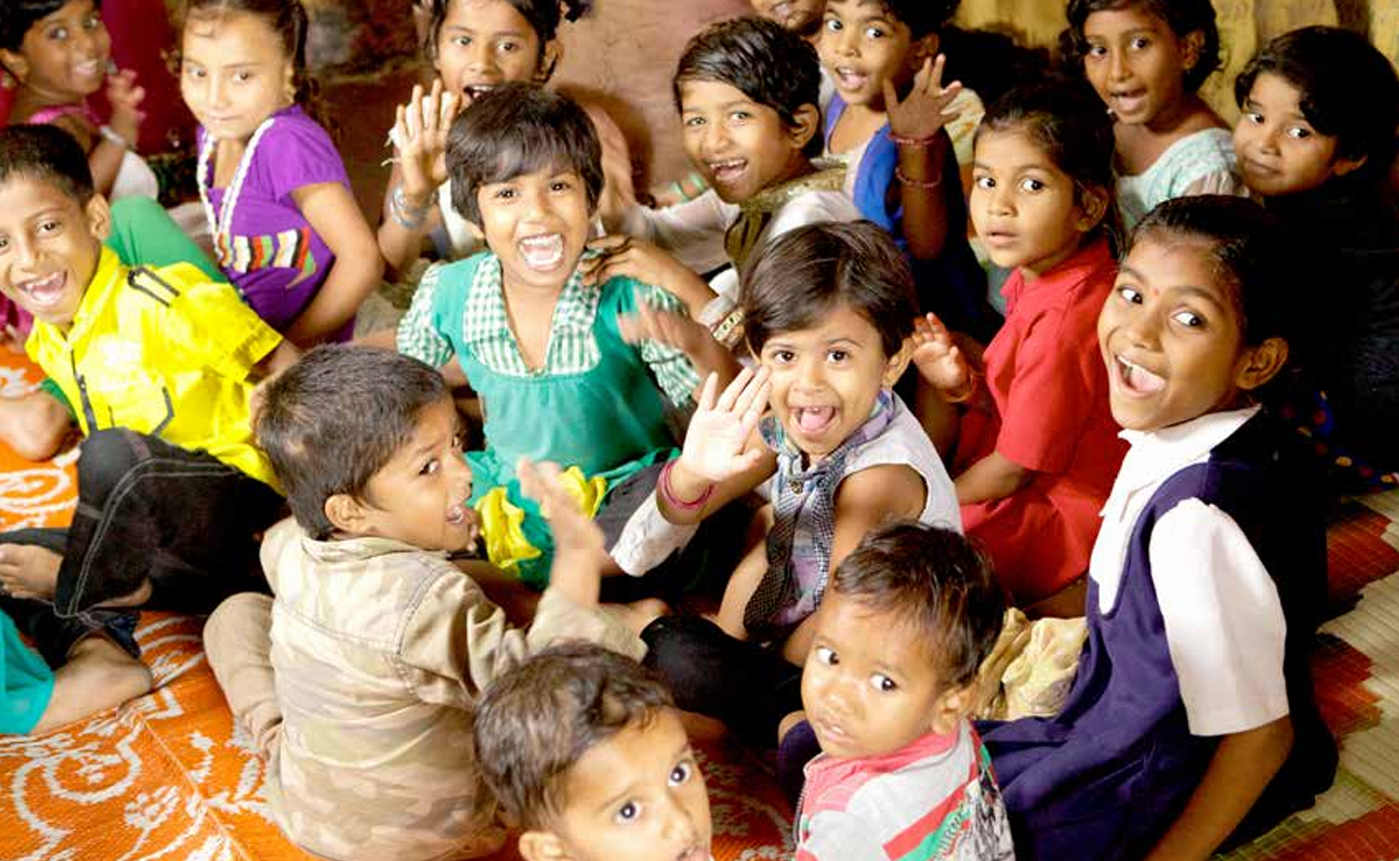
For half a century, Terre des Hommes Germany has stood with India's most vulnerable children — not as a distant donor, but as a partner on the ground, in the streets, and in the fight for every child's right to a dignified life.
The Beginning
In 1967, during the Vietnam War, children were among the worst affected. Terre des Hommes (TDH) Germany was founded in Stuttgart to provide urgent relief and rehabilitation. Soon, TDH Germany extended its concern and support to other regions, beginning work in South Asia in 1975.
The first office was set up in Pune — then a quiet town in Western India. The focus was on addressing the concerns of children affected by violence — economic as well as social. This included supporting institutions, both government-run and non-governmental, where rescued children were sent. TDH Germany also facilitated the adoption of abandoned children in India and Germany.
Our Journey
Real Lives, Real Change
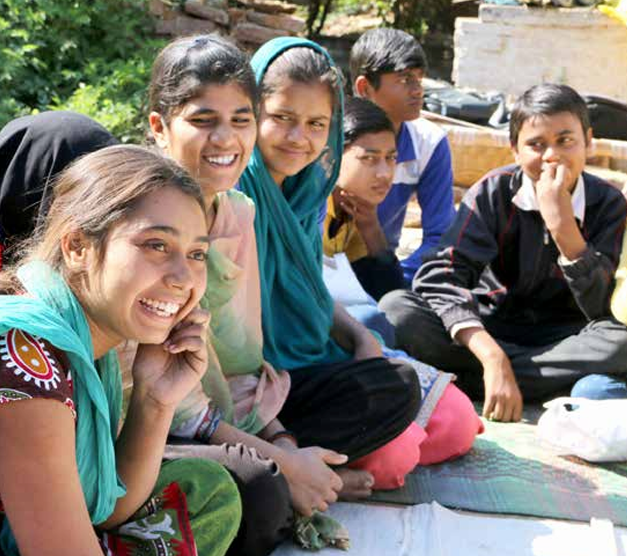
Kajlikheda Dholak Basti in Bhopal is home to families from de-notified tribes who traditionally make and sell drums. Marginalisation and lack of identity documents prevent access to services and schooling. Saba, a young woman determined to break this cycle, volunteered with Muskaan Sanstha. With TDH support, she started a children's community library in 2023. Despite ridicule and challenges, she persevered — using drawing and poetry as her tools. The modest tin-sheet library has become a foundation of hope, encouraging children to learn and attend school.
Ningaraja, 16, lost his father to alcoholism and was forced into child labour as a hotel cleaner. TDH partner AID intervened, re-enrolling him in school and supporting his education. He completed his 10th grade and is now studying Electronics at an Industrial Training Institute. Ningaraja dreams of supporting his family and building a brighter future.
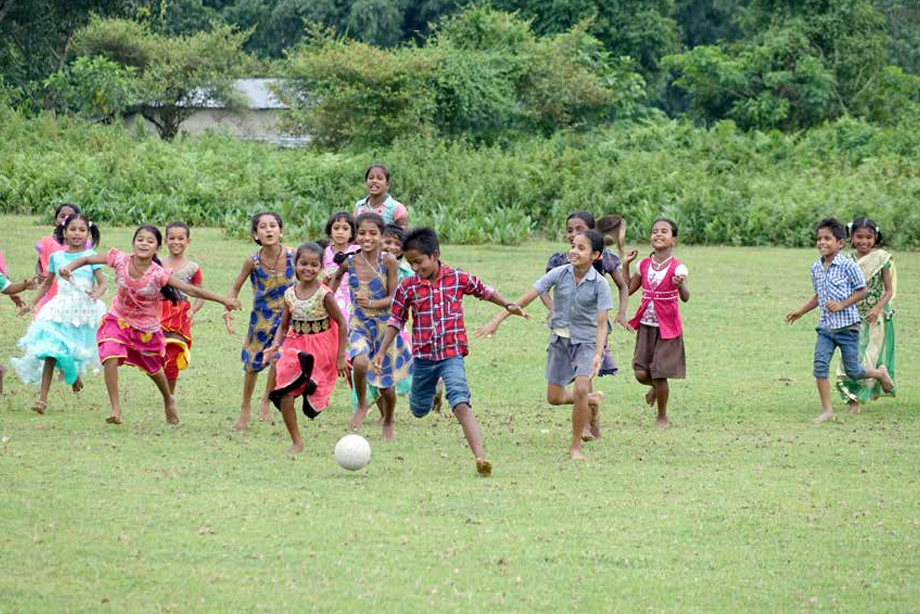
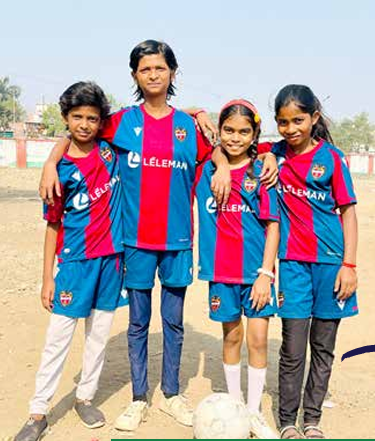
Rani Malhotra, a 12-year-old from Pune, joined a learning centre run by TDH partner New Vision in 2024. Initially shy about playing football with boys, she gained confidence with encouragement from staff and family. Rani now plays freely, attends support classes, and is preparing to rejoin school. "I love football," she says. "I can play as well as the boys!"
Since 2018
Youth Movement
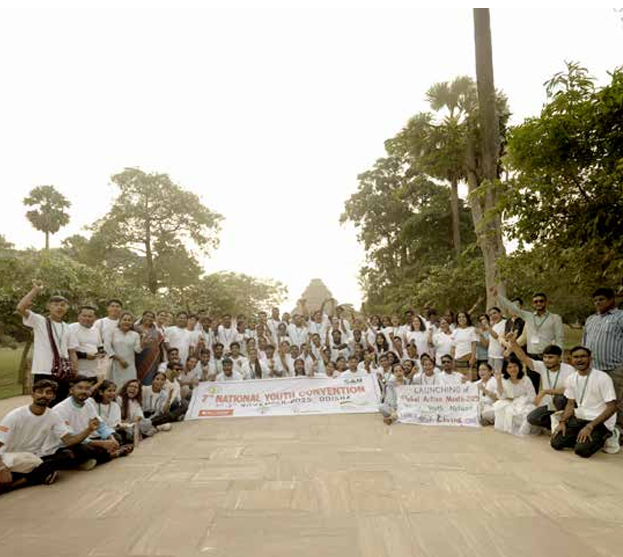
The Youth for Ecological Sustainability (YES) network began in 2012, when adolescents and youth from partner organizations came together in Bhopal to voice their concerns on ecological rights. What started as scattered youth groups soon evolved — through successive national conventions in Bangalore, Wardha, Lucknow, Chilika, the Sundarbans and Konark — into a collective with a shared vision of justice, participation and intergenerational equity.
Today, YES is a decentralized, youth-led network spread across 17 states. Young women constitute almost half the membership, and youth from various communities and speaking different languages continue to enrich the network's diversity.
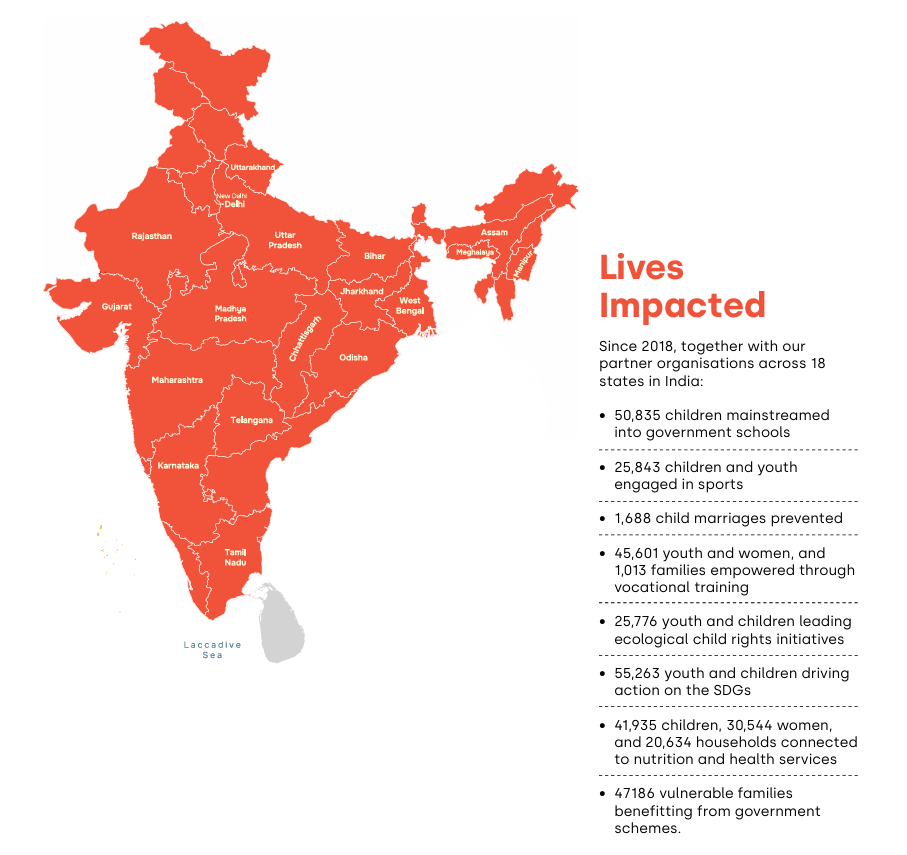
"There is reason for optimism: infant and maternal mortality have decreased, school enrollment has risen, child labour has been outlawed, and elementary education is free and compulsory. Yet the journey continues — with children, for children."
The Road Ahead
Terre des Hommes Germany remains committed to working with community-based partners in an inclusive and democratic partnership, where all stakeholders have a voice in decision-making and are empowered in their journey towards self-determination.
Education should expand opportunity, foster personal growth, and ensure decent living and working conditions for every child.
Children and youth affected by migration must be supported through local structures and empowered to voice their demands at all levels.
Civil society networks should enable community-based solutions to environmental crises and hold all stakeholders accountable.
Gender equality must be advanced by challenging patriarchal and binary structures that perpetuate discrimination against women and girls.
Inclusive partnerships will remain central, ensuring all stakeholders have a voice in decision-making and ownership of the process.

 March 01, 2026